Buy werkvertrag.eu ?
We are moving the project
werkvertrag.eu .
Are you interested in purchasing the domain
werkvertrag.eu ?
domain@kv-gmbh.de · 0541-91531010
Buy werkvertrag.eu ?
What is a graduation project in astronomy?
A graduation project in astronomy is a research or practical project that is typically undertaken by a student as part of their final year of study in astronomy or a related field. The project may involve conducting original research, analyzing astronomical data, or developing and testing new astronomical instruments or techniques. The goal of the graduation project is to demonstrate the student's ability to apply their knowledge and skills in astronomy to address a specific research question or problem, and to communicate their findings effectively. Graduation projects in astronomy often provide valuable experience for students pursuing careers in research, academia, or industry. **
'Astronomy scientist'
An astronomy scientist is a professional who studies celestial objects and phenomena in the universe. They use telescopes, satellites, and other instruments to observe and analyze stars, planets, galaxies, and other cosmic bodies. Astronomy scientists also conduct research to understand the origins, evolution, and behavior of these celestial objects, as well as the fundamental laws of physics that govern the universe. Their work contributes to our understanding of the cosmos and helps to advance scientific knowledge and technology. **


Similar search terms for Astronomy
Top-Angebote
Products related to Astronomy:
-
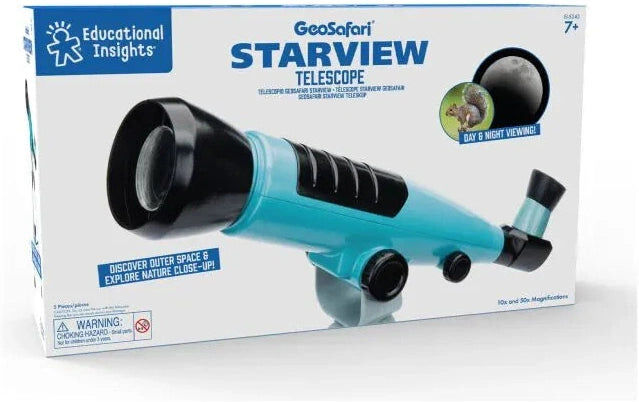
GeoSafari - MoonScope, Kid-Friendly Beginner Telescope for Astronomy Exploration and Fun, Includes Tabletop Tripod and Activity JournalThe GeoSafari MoonScope is a kid-friendly beginner telescope that makes astronomy approachable and fun. Perfect for curious young stargazers, it guides them to scan the sky, observe objects in space, and spot constellations with hands-on activities. The telescope features a kid-friendly beginner design that simplifies celestial exploration, and a tabletop tripod is included for stable, desk-side viewing on a table or nightstand. An activity journal provides guided experiments and space observations to track discoveries, and tools are included to learn how to scan the sky, identify planets and stars, and recognize constellations. The educational setup is suitable for home use or classroom learning, and it builds curiosity and observational skills through structured, hands-on activities. It also encourages independent exploration while learning fundamental astronomy concepts, and provides a clear, approachable path from setup to sky viewing, reducing setup hurdles.35,39 £*Shipping: 3,95 £Secure redirect to the provider
-
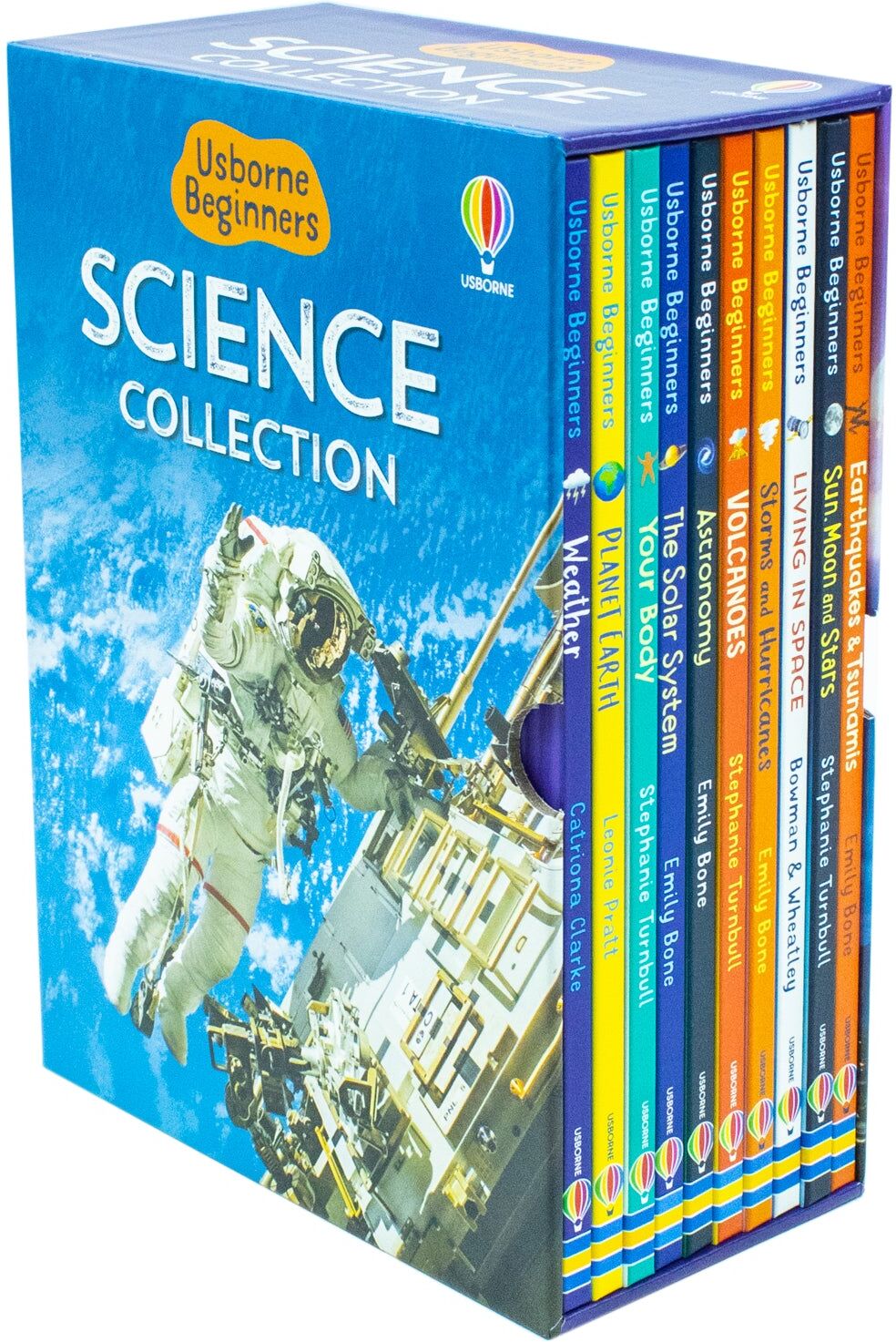
Usborne Beginners Science 10 Books Collection Set - Various Authors - Hardback - Ages 5-7 - Volcanoes, Astronomy, Living in Space & MoreIntroduce your child to the wonders of science with the Usborne Beginners Science 10 Books Collection Set. This colourful set of hardback books is perfect for children aged 5-7 who are beginning to read independently. The set includes ten titles that cover a range of fascinating topics, from volcanoes and astronomy to the human body and the solar system. Each book uses short sentences, vivid photographs, and clear illustrations to explain complex scientific concepts in a way that's easy to understand. The Usborne Beginners Science set is an ideal first science library for the home or classroom, providing a solid foundation for young learners to explore the natural and physical world.17,99 £*Shipping: 2,99 £Secure redirect to the provider
-
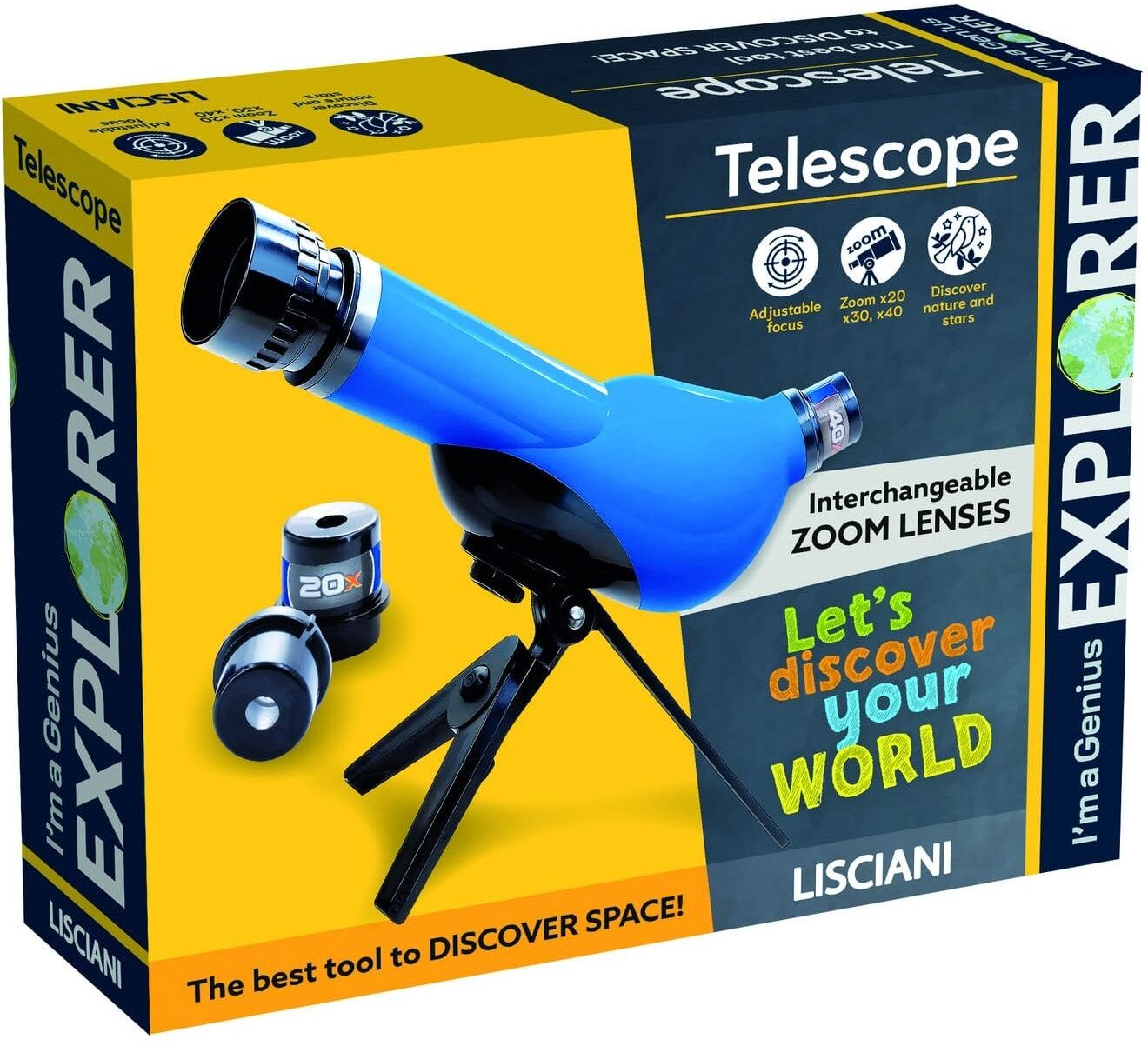
Lisciani I'm A Genius Telescope - The Ultimate Scientific Tool For First Steps In Astronomy And Close Up Sky ViewingDiscover the Lisciani I'm A Genius Telescope, a beginner-friendly instrument designed for first steps in astronomy and close-up sky viewing. This educational telescope invites curious minds to observe the sky and stars up close, making learning a hands-on exploration from the start. With a straightforward assembly and easy focusing, you can enjoy clearer views of the stars and constellations. The telescope's learning-focused design supports inquiry-driven exploration and hands-on discovery, making it ideal for family stargazing nights, after-school explorations, and early science projects. Built to withstand regular use, this durable telescope is perfect for regular study sessions.16,79 £*Shipping: 3,95 £Secure redirect to the provider
-
Usborne Beginners Science Collection 10 Books Box Set by Various Authors - Earthquakes & Tsunamis, Astronomy, Living in Space & More - Ages 5-9Introduce your child to the wonders of science with the Usborne Beginners Science 10 Books Collection Set. This comprehensive hardback set covers a range of topics, including earthquakes, volcanoes, astronomy, and the solar system, making it perfect for children aged 5-9 who are moving from picture books into independent reading. Each book focuses on a single big idea, broken into clear and accessible chunks, and features vivid photography and diagrams to help young readers understand complex concepts. The set includes titles such as Earthquakes; Tsunamis, Sun, Moon and Stars, Living in Space, and more. With Usborne's reputation for producing high-quality, engaging science books, this collection is an excellent addition to any home or classroom library.17,99 £*Shipping: 2,99 £Secure redirect to the provider

-
'Astrophysics or Astronomy?'
Astrophysics and astronomy are closely related fields, but they have distinct focuses. Astronomy is the study of celestial objects and phenomena in the universe, while astrophysics involves applying the principles of physics to understand the behavior and properties of these objects. Astrophysics delves deeper into the physical processes that govern the universe, such as the study of gravity, electromagnetism, and nuclear reactions. Both fields are essential for advancing our understanding of the cosmos, with astronomy providing observational data and astrophysics providing theoretical explanations. **
-
What is astronomy?
Astronomy is the scientific study of celestial objects such as stars, planets, galaxies, and other phenomena that exist beyond Earth's atmosphere. It involves observing, analyzing, and understanding the universe and its various components. Astronomers use telescopes and other instruments to gather data and make discoveries about the origins, evolution, and behavior of objects in space. Astronomy also plays a crucial role in helping us understand our place in the universe and how it all came to be. **
-
What is the topic of the project work in Astronomy?
The topic of the project work in Astronomy is the study of celestial objects and phenomena in the universe. This can include investigating planets, stars, galaxies, black holes, and other cosmic entities. Students may also explore topics such as the formation and evolution of the universe, the properties of different types of stars, or the search for extraterrestrial life. Overall, the project work in Astronomy aims to deepen our understanding of the vast and mysterious cosmos. **
-
What is the topic of the project work Astronomy 2?
The topic of the project work Astronomy 2 is the study of celestial bodies and phenomena beyond Earth's atmosphere. This may include the exploration of stars, planets, galaxies, and other astronomical objects, as well as the understanding of their formation, evolution, and interactions. The project work may also delve into the latest discoveries and advancements in the field of astronomy, as well as the technologies and methods used in astronomical research. **

Is astronomy a science?
Yes, astronomy is considered a science. It is the study of celestial objects such as stars, planets, galaxies, and the universe as a whole. Astronomers use the scientific method to make observations, form hypotheses, and test their theories. Through the use of mathematics, physics, and technology, astronomers are able to gather data and make predictions about the behavior and properties of objects in space. **
What does astronomy research?
Astronomy research involves studying celestial objects such as stars, planets, galaxies, and other phenomena in the universe. Researchers use telescopes, satellites, and other instruments to observe and analyze these objects to better understand their properties, behavior, and evolution. By studying astronomy, researchers aim to answer fundamental questions about the origins of the universe, the nature of dark matter and dark energy, and the potential for life beyond Earth. **
Top-Angebote
Products related to Astronomy:
-
Collins 2024 Guide to the Night Sky Book – Astronomy & Stargazing CollectionFrom the UK’s Number One Astronomy publisher, this is the bestselling stargazing handbook to the planets, stars and constellations visible from the northern hemisphere. With 6 pages for each month covering January–December 2024. This practical guide is an easy introduction to astronomy and a useful reference for seasoned stargazers. Designed for Britain and Ireland but usable anywhere in the world between 40°N and 60°N, covering most of Europe, southern Canada and the northern United States. Advice on where to start looking and a map of dark sky sites to avoid light pollution. Charts for the circumpolar and seasonal constellations. Easy-to-use star charts for each month with descriptions of objects and events to look for in 2024. Positions of the moon, visible planets and eclipses. Includes a section on comets and a detailed map of the moon. Now in three editions: Britain and Ireland; North America; Southern Hemisphere. Written and illustrated by astronomical experts, Storm Dunlop and Wil Tirion, and approved by the astronomers of the Royal Observatory Greenwich.1,99 £*Shipping: 1,99 £Secure redirect to the provider
-
GeoSafari - MoonScope, Kid-Friendly Beginner Telescope for Astronomy Exploration and Fun, Includes Tabletop Tripod and Activity JournalThe GeoSafari MoonScope is a kid-friendly beginner telescope that makes astronomy approachable and fun. Perfect for curious young stargazers, it guides them to scan the sky, observe objects in space, and spot constellations with hands-on activities. The telescope features a kid-friendly beginner design that simplifies celestial exploration, and a tabletop tripod is included for stable, desk-side viewing on a table or nightstand. An activity journal provides guided experiments and space observations to track discoveries, and tools are included to learn how to scan the sky, identify planets and stars, and recognize constellations. The educational setup is suitable for home use or classroom learning, and it builds curiosity and observational skills through structured, hands-on activities. It also encourages independent exploration while learning fundamental astronomy concepts, and provides a clear, approachable path from setup to sky viewing, reducing setup hurdles.35,39 £*Shipping: 3,95 £Secure redirect to the provider
-
Usborne Beginners Science 10 Books Collection Set - Various Authors - Hardback - Ages 5-7 - Volcanoes, Astronomy, Living in Space & MoreIntroduce your child to the wonders of science with the Usborne Beginners Science 10 Books Collection Set. This colourful set of hardback books is perfect for children aged 5-7 who are beginning to read independently. The set includes ten titles that cover a range of fascinating topics, from volcanoes and astronomy to the human body and the solar system. Each book uses short sentences, vivid photographs, and clear illustrations to explain complex scientific concepts in a way that's easy to understand. The Usborne Beginners Science set is an ideal first science library for the home or classroom, providing a solid foundation for young learners to explore the natural and physical world.17,99 £*Shipping: 2,99 £Secure redirect to the provider
-
What is a graduation project in astronomy?
A graduation project in astronomy is a research or practical project that is typically undertaken by a student as part of their final year of study in astronomy or a related field. The project may involve conducting original research, analyzing astronomical data, or developing and testing new astronomical instruments or techniques. The goal of the graduation project is to demonstrate the student's ability to apply their knowledge and skills in astronomy to address a specific research question or problem, and to communicate their findings effectively. Graduation projects in astronomy often provide valuable experience for students pursuing careers in research, academia, or industry. **
-
'Astronomy scientist'
An astronomy scientist is a professional who studies celestial objects and phenomena in the universe. They use telescopes, satellites, and other instruments to observe and analyze stars, planets, galaxies, and other cosmic bodies. Astronomy scientists also conduct research to understand the origins, evolution, and behavior of these celestial objects, as well as the fundamental laws of physics that govern the universe. Their work contributes to our understanding of the cosmos and helps to advance scientific knowledge and technology. **
-
'Astrophysics or Astronomy?'
Astrophysics and astronomy are closely related fields, but they have distinct focuses. Astronomy is the study of celestial objects and phenomena in the universe, while astrophysics involves applying the principles of physics to understand the behavior and properties of these objects. Astrophysics delves deeper into the physical processes that govern the universe, such as the study of gravity, electromagnetism, and nuclear reactions. Both fields are essential for advancing our understanding of the cosmos, with astronomy providing observational data and astrophysics providing theoretical explanations. **
-
What is astronomy?
Astronomy is the scientific study of celestial objects such as stars, planets, galaxies, and other phenomena that exist beyond Earth's atmosphere. It involves observing, analyzing, and understanding the universe and its various components. Astronomers use telescopes and other instruments to gather data and make discoveries about the origins, evolution, and behavior of objects in space. Astronomy also plays a crucial role in helping us understand our place in the universe and how it all came to be. **
Similar search terms for Astronomy
-
Lisciani I'm A Genius Telescope - The Ultimate Scientific Tool For First Steps In Astronomy And Close Up Sky ViewingDiscover the Lisciani I'm A Genius Telescope, a beginner-friendly instrument designed for first steps in astronomy and close-up sky viewing. This educational telescope invites curious minds to observe the sky and stars up close, making learning a hands-on exploration from the start. With a straightforward assembly and easy focusing, you can enjoy clearer views of the stars and constellations. The telescope's learning-focused design supports inquiry-driven exploration and hands-on discovery, making it ideal for family stargazing nights, after-school explorations, and early science projects. Built to withstand regular use, this durable telescope is perfect for regular study sessions.16,79 £*Shipping: 3,95 £Secure redirect to the provider
-
Usborne Beginners Science Collection 10 Books Box Set by Various Authors - Earthquakes & Tsunamis, Astronomy, Living in Space & More - Ages 5-9Introduce your child to the wonders of science with the Usborne Beginners Science 10 Books Collection Set. This comprehensive hardback set covers a range of topics, including earthquakes, volcanoes, astronomy, and the solar system, making it perfect for children aged 5-9 who are moving from picture books into independent reading. Each book focuses on a single big idea, broken into clear and accessible chunks, and features vivid photography and diagrams to help young readers understand complex concepts. The set includes titles such as Earthquakes; Tsunamis, Sun, Moon and Stars, Living in Space, and more. With Usborne's reputation for producing high-quality, engaging science books, this collection is an excellent addition to any home or classroom library.17,99 £*Shipping: 2,99 £Secure redirect to the provider
-
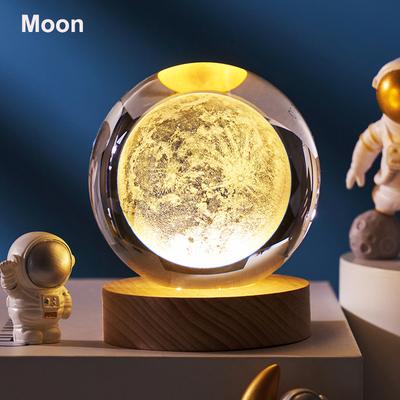
Evergreen Home Goods Astronomy Solar System Crystal Ball, LED Light Up Globe With Planets, Moon, And Astronaut For Home Desk Decor moonGaze into the heart of a miniature universe with our breathtaking Solar System Crystal Ball. This isn't just a decoration; it's a captivating portal to the stars, designed to ignite your imagination and bring the profound beauty of the cosmos right...29,97 $*Shipping: 0,00 $Secure redirect to the provider
-
Arcturus Children's Encyclopedia of Space by Giles Sparrow Visual Guide to the Universe, Planets, Stars & Solar System Astronomy Reference Book for KidsJourney beyond Earth and discover the wonders of the cosmos with Children's Encyclopedia of Space: A Visual Guide to the Universe by Giles Sparrow. Part of the Arcturus Children's Reference Library, this engaging visual encyclopedia introduces young readers to the fascinating world of space, astronomy and the universe. Explore the Solar System, planets, moons, stars, galaxies and other extraordinary objects in space while developing an understanding of the vast universe beyond our planet. Presented as an accessible visual reference guide, the book makes complex astronomical topics engaging and easier for young readers to explore. Ideal for children fascinated by planets, stars, space exploration and astronomy, this encyclopedia encourages curiosity and provides a useful resource for independent reading, homework, school projects and general knowledge. Whether learning about our neighbouring planets or exploring the mysteries of distant stars and galaxies, Children's Encyclopedia of Space is a valuable addition to any young space enthusiast's bookshelf. Key Features Engaging children's space encyclopedia Written by astronomy author Giles Sparrow A visual guide to the universe and outer space Explores planets, stars, moons, galaxies and the Solar System Introduces astronomy in an accessible format for young readers Ideal for school projects, homework and independent learning Part of the Arcturus Children's Reference Library Excellent educational gift for young space and science enthusiasts5,99 £*Shipping: 2,99 £Secure redirect to the provider
-
What is the topic of the project work in Astronomy?
The topic of the project work in Astronomy is the study of celestial objects and phenomena in the universe. This can include investigating planets, stars, galaxies, black holes, and other cosmic entities. Students may also explore topics such as the formation and evolution of the universe, the properties of different types of stars, or the search for extraterrestrial life. Overall, the project work in Astronomy aims to deepen our understanding of the vast and mysterious cosmos. **
-
What is the topic of the project work Astronomy 2?
The topic of the project work Astronomy 2 is the study of celestial bodies and phenomena beyond Earth's atmosphere. This may include the exploration of stars, planets, galaxies, and other astronomical objects, as well as the understanding of their formation, evolution, and interactions. The project work may also delve into the latest discoveries and advancements in the field of astronomy, as well as the technologies and methods used in astronomical research. **
-
Is astronomy a science?
Yes, astronomy is considered a science. It is the study of celestial objects such as stars, planets, galaxies, and the universe as a whole. Astronomers use the scientific method to make observations, form hypotheses, and test their theories. Through the use of mathematics, physics, and technology, astronomers are able to gather data and make predictions about the behavior and properties of objects in space. **
-
What does astronomy research?
Astronomy research involves studying celestial objects such as stars, planets, galaxies, and other phenomena in the universe. Researchers use telescopes, satellites, and other instruments to observe and analyze these objects to better understand their properties, behavior, and evolution. By studying astronomy, researchers aim to answer fundamental questions about the origins of the universe, the nature of dark matter and dark energy, and the potential for life beyond Earth. **
* All prices are inclusive of VAT and, if applicable, plus shipping costs. The offer information is based on the details provided by the respective shop and is updated through automated processes. Real-time updates do not occur, so deviations can occur in individual cases. ** Note: Parts of this content were created by AI.